
Before you hitch any trailer to your truck or SUV, make sure you consider these six points:
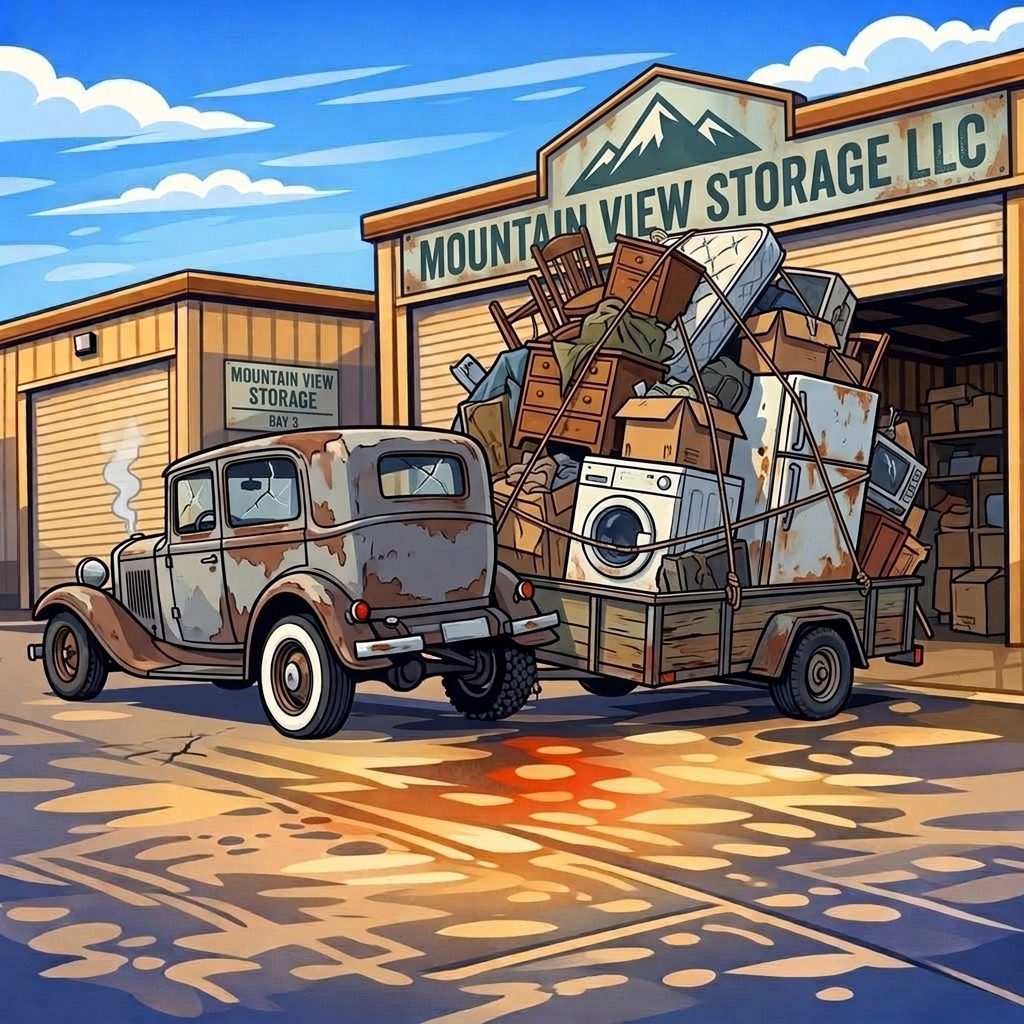 Improperly Loaded and Balanced
1. Stay Within Your Limits. Review the towing capacity of your specific vehicle and ensure it’s capable of handling the weight of your trailer. Exceeding the maximum towing capacity can result in dangerous handling, insufficient braking performance, or serious damage to the vehicle’s suspension, engine and drivetrain. Also make sure your trailer hitch can handle your trailer’s loaded weight.
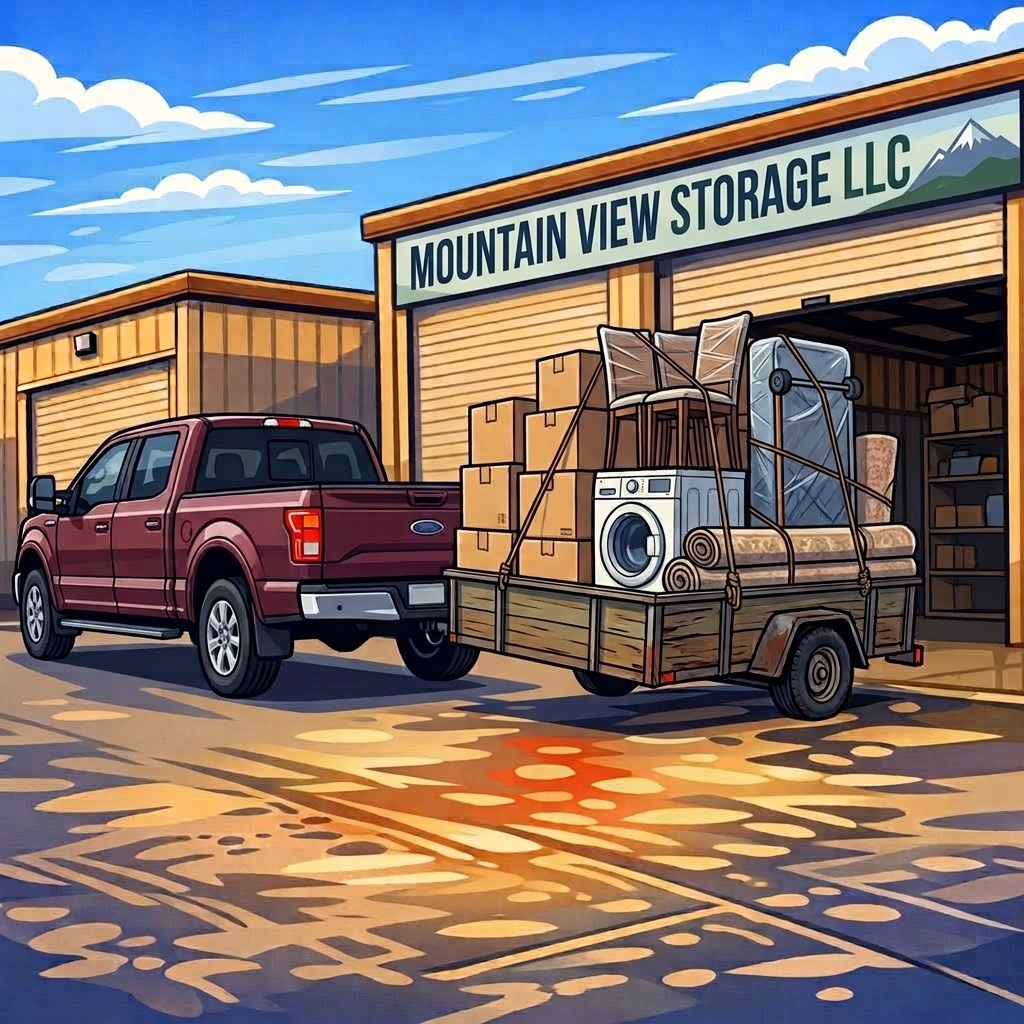 Properly Loaded and Secured
2. Pack your trailer properly. Stay within the trailer’s maximum load capacity and ensure any cargo is properly positioned. You want roughly 60% of the trailer’s load placed over the front half of the trailer and evenly distributed on the left and right sides. All cargo should be secured to prevent the load from shifting.
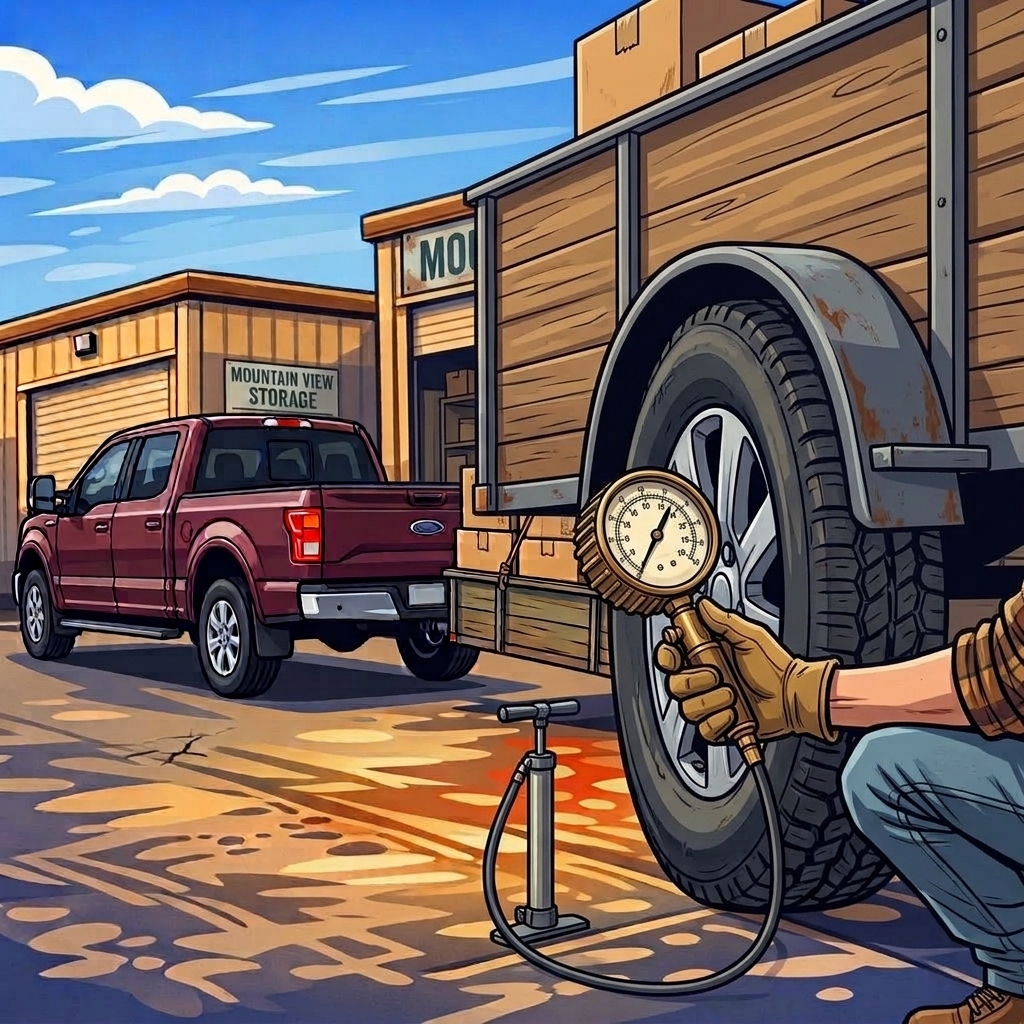 Checking Trailer Tire Pressure
3. Check your tires. This goes for both your tow vehicle and your trailer. Tires that are not properly inflated can negatively affect handling and create more rolling resistance, which not only forces the engine to work harder and consume more fuel but also increases tire temperatures and may contribute to a blow-out. Also, check the speed rating on the tires for both your tow vehicle and trailer, and ensure you never exceed that speed while on the road.
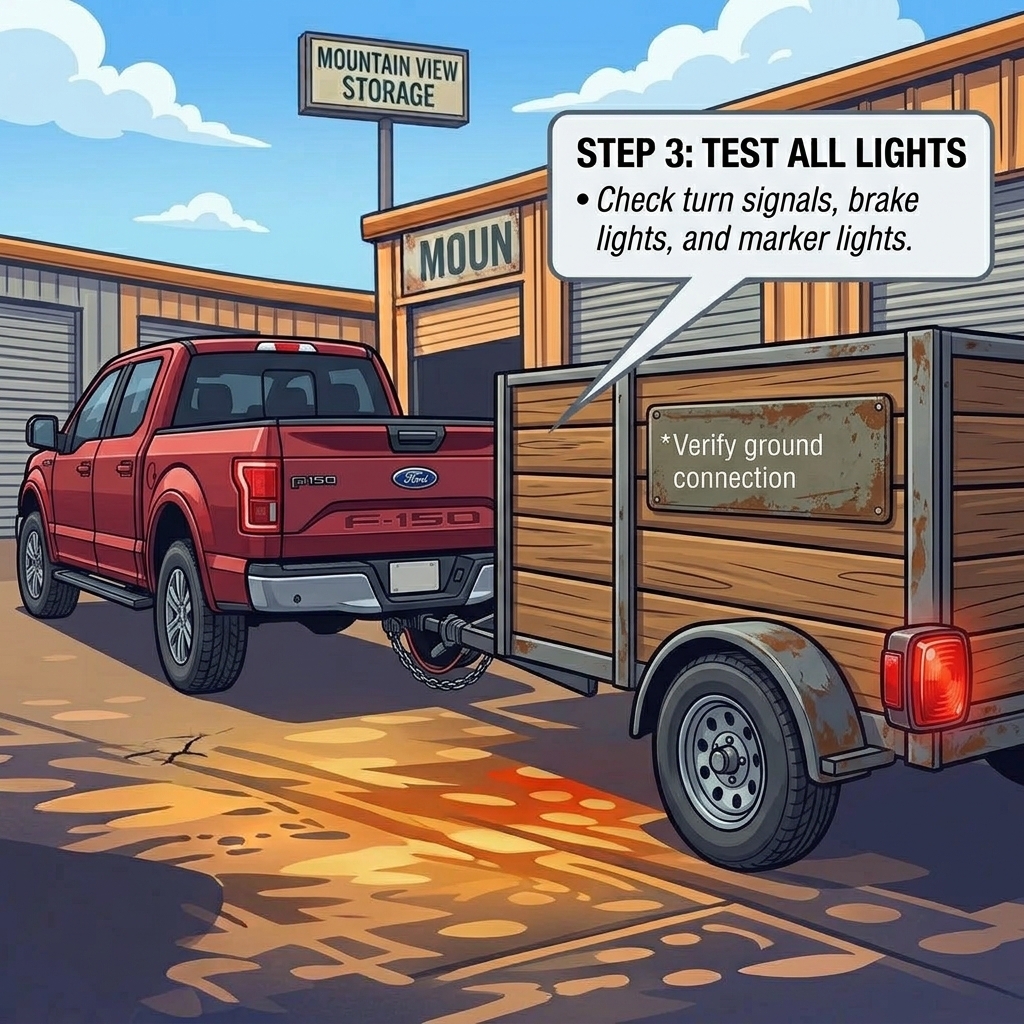 Verifying Taillights & Electrical
4. Check your lights. The taillights and marker lamps on your trailer are quite important. Large trailers or loads may obscure the taillights on your tow vehicle. If the lights on your trailer aren’t illuminated, other drivers may not see your vehicle, especially at night, and collisions can occur.
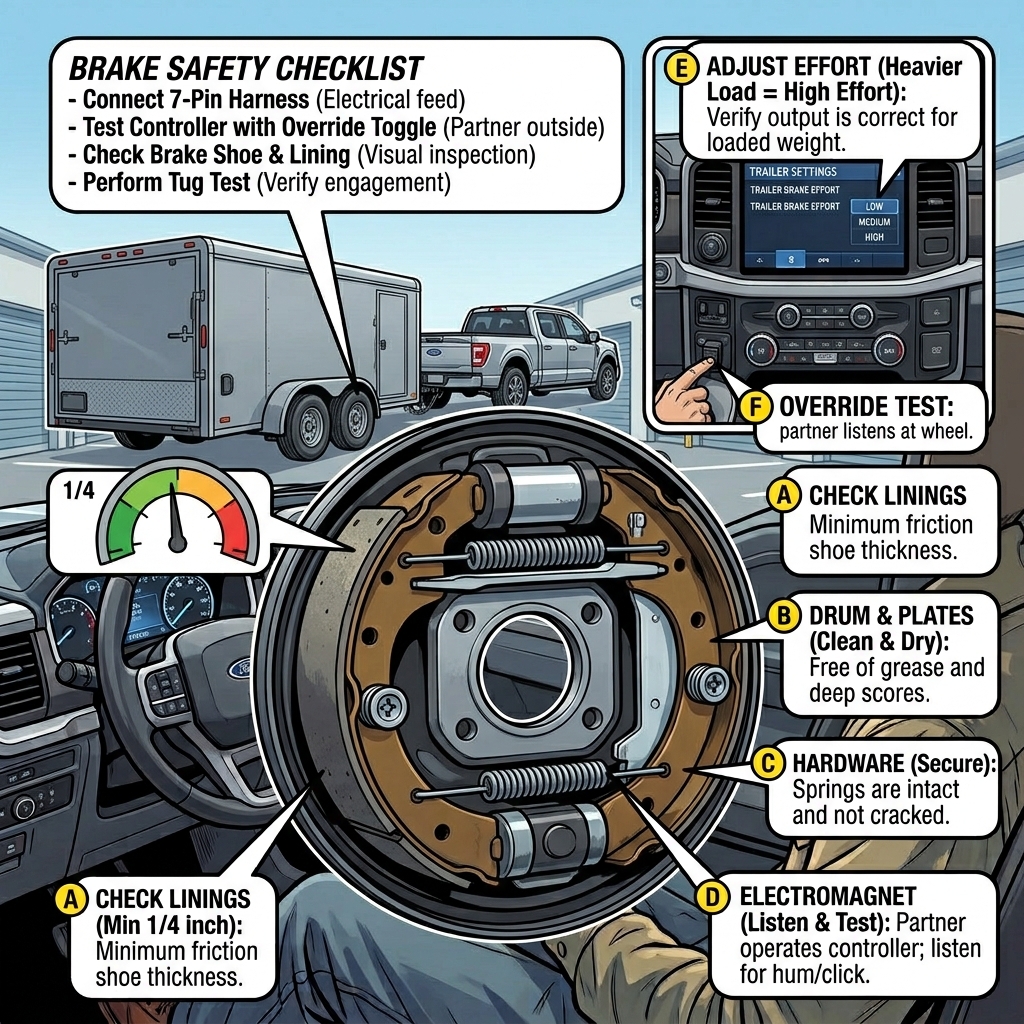 Checking Your Brakes
5. Check Your Brakes. Smaller, lighter trailers may not need trailer brakes of any kind, but heavier trailers, or those designed to carry heavier loads, will usually incorporate a trailer brake system.
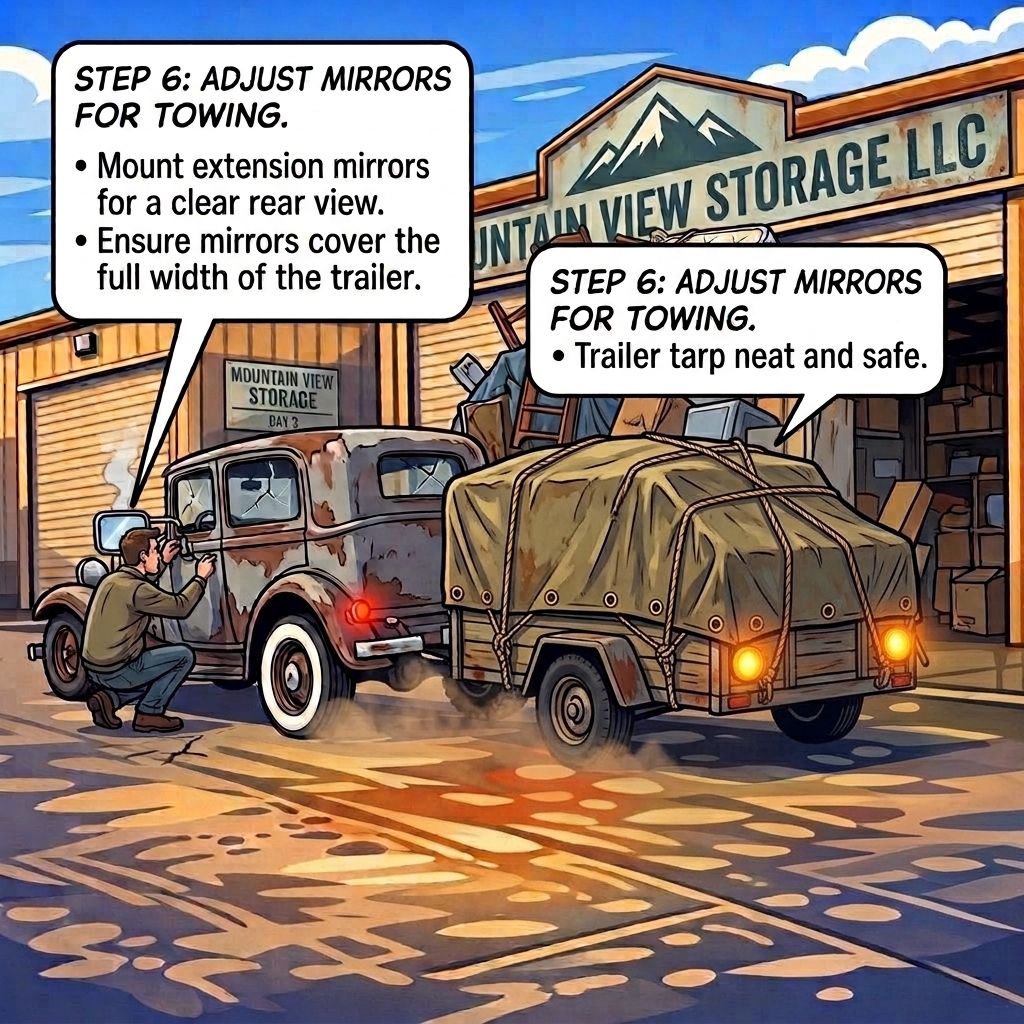 Adjust Mirrors for Towing
6. Adjust Your Mirrors. Before taking off, make sure your side view mirrors are adjusted to create a clear view that extends to the end of the trailer.
 Store Phones Safely
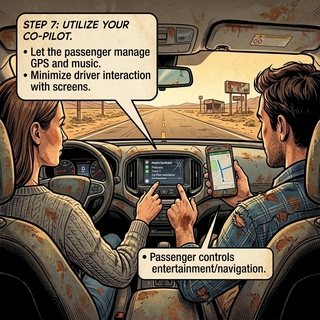 Co-Pilot Assistance
Use a "Co-Pilot": Let a passenger manage GPS, music, or phone calls.
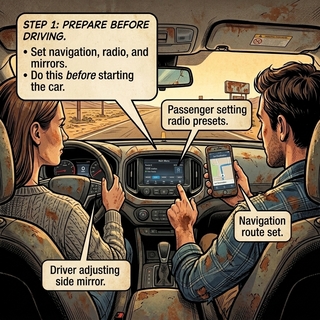
Pre-Drive Setup
Prepare Before Driving: Set navigation, radio, and mirrors before starting the car.
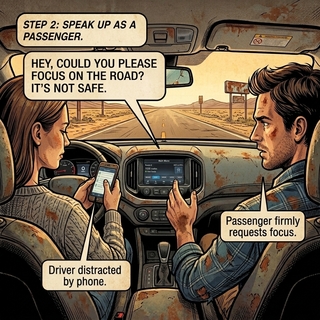 Passenger Advocacy
Speak Up: If you are a passenger in a car with a distracted driver, ask them to focus on the road.
